
Rooting for the Home Team


Orioles baseball is back. You know the drill. When they lose, you’re sad. When they win, you’re ... startled. In a good way, of course. 

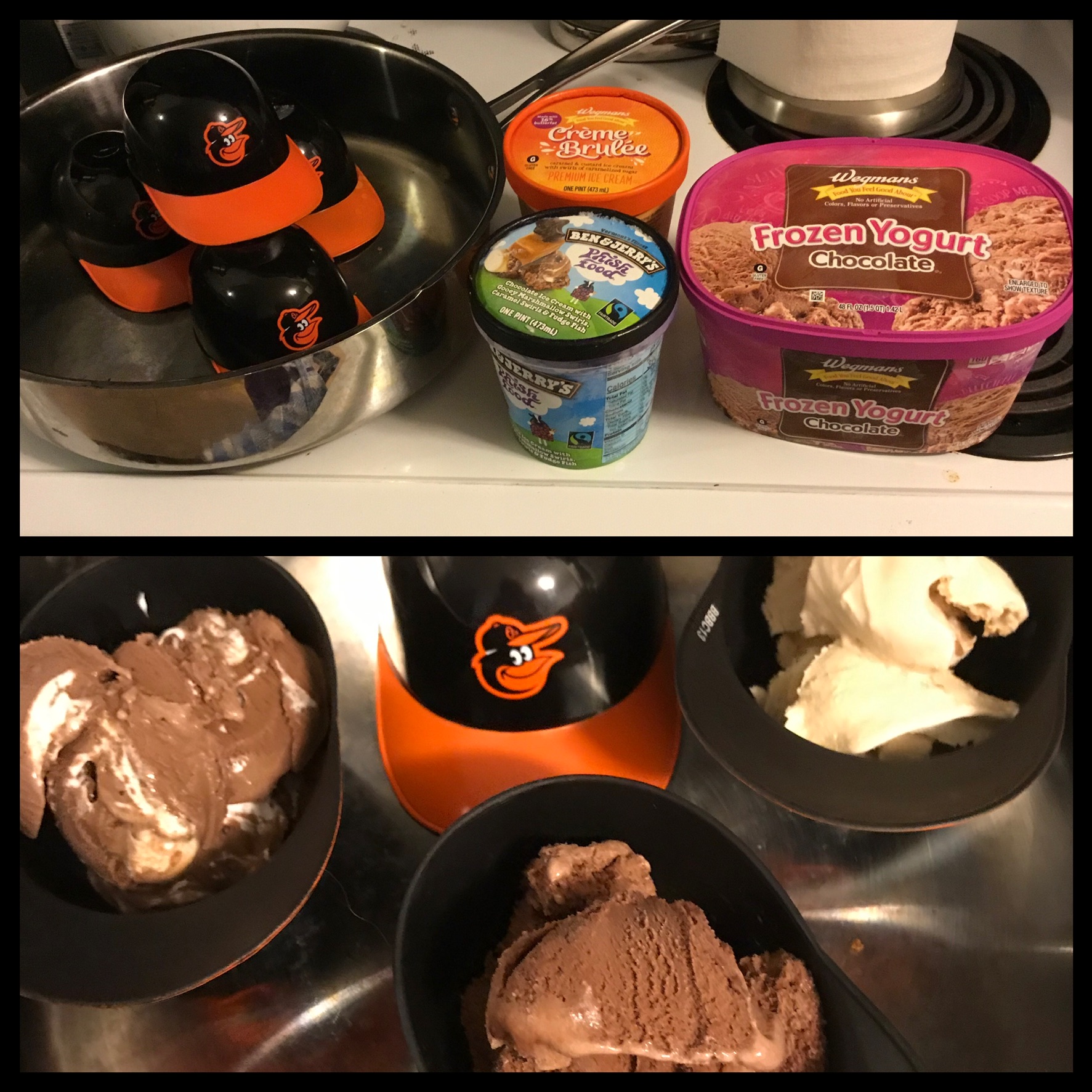
At my house we celebrated the return of baseball with our traditional baseball meal: hot dogs, chips, soda, ice cream in little Orioles caps.


My husband watches baseball while making music. He’s done it as long as I have known him. This weekend we’ve had guitar and banjo. (In previous seasons we’ve also been treated to harp, lyre, mandolin, electric bass, and tuba.) He is able to follow every detail of the game while simultaneously choosing the right fingering and strumming to whatever tune he is playing. I don’t know how he does it.

In some ways it seems crazy to me that baseball is returning into our pandemic world where every day is marked with concern for illness rates, hospitalizations, and death. On top of that: national political turmoil, protests for social justice, fear that our upcoming election could be compromised. How does baseball fit in?

Of course that answer is simple. It reminds us of when things were “normal”. It reminds us of our lives “in the before times” as I have seen people write lately. Remember when we could all crowd together in a ballpark? Remember when all we needed to worry about on a Sunday afternoon was whether we’d get to see some Orioles magic?

Those were the days.

It must cost quite a bit of money to make baseball happen right now. Is it an unnecessary luxury? Perhaps that money would be better spent helping the thousands who are suffering and struggling. How would that look? I don’t know. Perhaps it’s just a pipedream. 

On the other hand, for those who love baseball, it’s a precious respite from all that ails us. And, if a bit of respite gives folks the strength to carry on, maybe it’s worth it. 

Comments

Popular posts from this blog

Teacher Gifts

Today is the last day of school before the Winter Break. It’s a good time to remember the far-reaching nature of our public school system. You may not have children. You may have sent your children to independent schools. It matters not. You will be impacted one way or another. Yesterday I read a long thread on Facebook about several waves of illness in the schools right now. There’s influenza A and norovirus, I believe. And of course there’s COVID. Apparently in some individual schools the rate of illness is high enough for school admin to notify parents.  When I was little the acceptable holiday gift for a teacher was one of those lovely floral handkerchief squares. (I don’t know what it was for male teachers. They were rare in my elementary years.) These days the range of teacher gifts is wider and I have fond memories of Target gift cards which I have written about before. I think it’s safe to say that giving one’s teacher Influenza, norovirus, or COVID is not the ideal holiday...

F ³: We Are Not Entitled

  A college student went missing. His family and friends were distraught. The community was encouraged to be on the lookout and spread the word.  Days passed.  They must have been agonizing days for those who cared about the missing student. Thoughts that foul play had been involved cannot have been far from their thoughts.  Then, at last, the student was found. Alive. The news was shared with the public.  So. Much. Relief. A family had been reunited with their child. Even though we know that life is complicated, I think it is okay to accept this as a happy ending and leave it at that.  But the world of social media says no. For every expression of joy at the news came questions and even judgement. It became clear to me that some folks felt entitled to an explanation. They wanted the backstory. It’s as though they felt that, by enlisting the help of the public on social media, the authorities now owed them all the details. Television dramas often weave curr...

Separate and Unequal

  Remember “Separate but equal”? Remember how that really meant that Black schools languished in  broken-down buildings without adequate heat or toilet facilities, with cast-off, ragged learning materials, underfunded and largely ignored? The Supreme Court struck that down in 1954. The evidence was clear that separate was not equal. Plessy v Ferguson had led to - - no, endorsed - - deeply unequal schooling and opportunities. We tend to think of Brown v Board as being purely about racial integration. It was not.  It was about the logical consequences of segregation. And they were not, not, not equal. The ruling in 1954 didn’t transform public education for non-whites into a land of milk and honey by any means. But it articulated some essential truths in a way that made including everyone a legal precedent which could be relied upon and built upon. It was better than what came before it but it rested upon unsteady ground. It did not necessarily change the hearts or minds ...